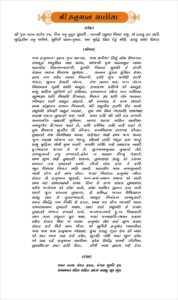
॥ દોહા ॥
શ્રી ગુરૂ ચરન સરોજ રજ, નિજ મન મુકુરૂ સુધારિ ।
બરનઉં રઘુબર બિમલ જસુ, જો દાયકુ ફલ ચારિ ॥
બુદ્ધિહીન તનુ જાનકે, સુમિરૌં પવન કુમાર ।
બલ બુદ્ધિ વિદ્યા દેહુ મોહિં, હરહુ કલેશ વિકાર ॥
॥ ચૌપાઈ ॥
જય હનુમાન જ્ઞાન ગુન સાગર ।
જય કપીસ તિહું લોક ઉજાગર ॥
રામદૂત અતુલિત બલ ધામા ।
અંજનિ પુત્ર પવન સુત નામા ॥
મહાવીર વિક્રમ બજરંગી ।
કુમતિ નિવાર સુમતિ કે સંગી ॥
કંચન બરન વિરાજ સુવેસા ।
કાનન કુંડલ કુંચિત કેસા ॥
હાથ બજ્ર ઔર ધ્વજા બિરાજૈ ।
કાંધે મૂંજ જનેઊ સાજૈ ॥
શંકર સુવન કેસરી નંદન ।
તેજ પ્રતાપ મહા જગ બંદન ॥
વિદ્યાવાન ગુની અતિ ચાતુર ।
રામ કાજ કરિબે કો આતુર ॥
પ્રભુ ચરિત્ર સુનિબે કો રસિયા ।
રામ લખન સીતા મન બસિયા ॥
સૂક્ષ્મ રૂપ ધરિ સિયહિં દિખાવા ।
વિકટ રૂપ ધરિ લંક જલાવા ॥
ભીમ રૂપ ધરિ અસુર સંહારે ।
રામચંદ્ર કે કાજ સંવારે ॥
લાય સંજીવન લખન જિયાયે ।
શ્રી રઘુબીર હરષિ ઉર લાયે ॥
રઘુપતિ કીન્હીં બહુત બડ઼ાઈ ।
તુમ મમ પ્રિય ભરતહિ સમ ભાઈ ॥
સહસ્ર બદન તુમ્હારો જસ ગાવૈં ।
અસ કહિ શ્રીપતિ કંઠ લગાવૈં ॥
સનકાદિક બ્રહ્માદિ મુનિસા ।
નારદ સારદ સહિત અહીસા ॥
જમ કુબેર દિક્પાલ જહાં તે ।
કવિ કોવિદ કહિ સકે કહાં તે ॥
તુમ ઉપકાર સુગ્રીવહિં કીન્હાં ।
રામ મિલાય રાજ પદ દીન્હાં ॥
તુમ્હરો મંત્ર વિભીષણ માના ।
લંકેશ્વર ભયે સબ જગ જાના ॥
જુગ સહસ્ત્ર યોજન પર ભાનુ |
લીલ્યો તાહિ મધુર ફલ જાનુ ॥
પ્રભુ મુદ્રિકા મેલિ મુખ માહીં |
જલધિ લાંધી ગયે અચરજ નાહીં ||
દુર્ગમ કાજ જગત કે જેતે |
સુગમ અનુગ્રહ તુમ્હરે તેતે ||
રામ દુઆરે તુમ રખવારે |
હોત ન આજ્ઞા બિનુ પૈસારે ||
સબ સુખ લહૈ તુમ્હારી સરના |
તુમ રક્ષક કાહુ કો ડરના ||
આપન તેજ સમ્હારૌ આપે |
તીનો લોક હાંક તે કાંપે ||
ભુત પિશાચ નિકટ નહિં આવૈ |
મહાવીર જબ નામ સુનાવૈ ||
નાસે રોગ હરે સબ પીરા |
જપત નિરંતર હનુમંત બિરા ||
સંકટ સે હનુમાન છુડાવૈ |
મન કર્મ બચન ધ્યાન જો લાવૈ ||
સબ પર રામ તપસ્વી રાજા |
તિન કે કાજ સકલ તુમ સાજા ||
ઔર મનોરથ જો કોઈ લાવે |
સોઈ અમિત જીવન ફલ પાવે ||
ચારો જુગ પરતાપ તુમ્હારા |
હૈ પ્રસિધ્ધ જગત ઉજીયારા ||
સાધુ સંત કે તુમ રખવારે |
અસુર નિકંદન રામ દુલારે ||
અષ્ટ સિધ્ધિ નૌ નિધિ કે દાતા |
અસ બર દીન જાનકી માતા ||
રામ રસાયન તુમ્હરે પાસા |
સદા રહો રઘુપતિ કે દાસા ||
તુમ્હરે ભજન રામકો પાવે |
જનમ જનમ કે દુઃખ બિસરાવૈ ||
અન્ત કાલ રઘુબર પુર જાઈ |
જહાં જન્મ હરી ભકત કહાઈ ||
ઔર દેવતા ચિત ન ધરઈ |
હનુમંત સેઈ સર્વ સુખ કરઈ ||
સંકટ કટે મિટૈ સબ પીરા |
જો સુમિરૈ હનુમંત બલવીરા ||
જય, જય, જય, હનુમાન ગોસાઈ |
કૃપા કરહુ ગુરુ દેવકી નાઈ ||
જો સતબાર પાઠ કર કોઈ |
છુટહિ બન્દિ મહા સુખ હોઈ ||
જો યહ પઢૈ હનુમાન ચાલીસા |
હોય સિધ્ધિ સાખી ગૌરીસા ||
તુલસીદાસ સદા હરિ ચેરા |
કીજે નાથ હદય મહં ડેરા ||
પવન તનય સંકટ હરન
મંગલ મૂરતિ રુપ |
રામલખનસીતા સહિત
હૃદય બસહુ સુરભૂપ ||
|| સિયાવર રામચંદ્ર કી જય ||
|| રમાપતિ રામચંદ્ર કી જય ||
|| પવનસૂત હનુમાન કી જય ||
|| ઉમાપતિ મહાદેવ કી જય ||
|| બ્રિન્દાવન કૃષણચંદ્ર કી જય ||
|| બોલો ભાઇ સબ સંતન કી જય ||
|| ઇતિ ||
Hanuman Chalisa: Complete Guide
Introduction
What is the Hanuman Chalisa?
The Hanuman Chalisa is a sacred 40-verse devotional hymn composed by the poet-saint Goswami Tulsidas in the 16th century, written in the Awadhi dialect of Hindi. The word Chalisa derives from the Hindi word chālīs, meaning forty — a reference to the forty poetic chaupais (quatrains) that praise the glory, power, and devotion of Lord Hanuman.
Hanuman ji, the mighty son of the Wind God (Vayu) and Anjana, is revered as the most devoted disciple of Lord Rama. He is worshipped as the symbol of strength, courage, selfless service, and unwavering bhakti. The Hanuman Chalisa is widely regarded as one of the most powerful and accessible prayers in the Hindu tradition — chanted daily by millions across India and around the world.
Whether recited at dawn before beginning the day, at a temple on Tuesday evenings, or silently during times of fear or hardship, the Chalisa holds a unique place in the hearts of devotees. It is said that a sincere recitation of the Hanuman Chalisa can remove obstacles, dispel negativity, and fill the devotee with divine strength and peace.
Verse-by-Verse Explanation
Hanuman Chalisa — Meaning & Commentary
The Hanuman Chalisa opens with two invocatory dohas, followed by forty chaupais, and closes with a final doha. Below is a guided explanation of the key verses and sections.
Invocation to the Guru
बरनउँ रघुबर बिमल जसु, जो दायकु फल चारि।।
Shri Guru Charan Saroj Raj, Nij Manu Mukuru Sudhari. Barnau Raghubar Bimal Jasu, Jo Dayaku Phala Chari.
Tulsidas begins by cleansing the mirror of his mind with the dust of his Guru’s lotus feet. With this purified mind, he sets out to describe the pure, spotless glory of Lord Rama — a glory that grants the devotee all four fruits of life: Dharma (righteousness), Artha (prosperity), Kama (desire), and Moksha (liberation). This verse establishes the poet’s humility before beginning the great praise of Hanuman.
Prayer to Hanuman
बल बुद्धि बिद्या देहु मोहिं, हरहु कलेस बिकार।।
Buddhihin Tanu Janike, Sumirau Pavan-Kumar. Bal Buddhi Vidya Dehu Mohi, Harahu Kalesh Vikar.
Acknowledging his own intellectual limitations, Tulsidas calls upon Pavan-Kumar (son of the Wind) — Hanuman — and prays for strength (Bal), intelligence (Buddhi), and knowledge (Vidya). He also implores Hanuman to remove all his sorrows and impurities. This verse is the heart of the Chalisa’s purpose: seeking divine grace to overcome one’s personal shortcomings.
Hanuman’s Divine Appearance
जय कपीस तिहुँ लोक उजागर।।
राम दूत अतुलित बल धामा।
अंजनि पुत्र पवनसुत नामा।।
Jai Hanuman Gyan Gun Sagar. Jai Kapis Tihu Lok Ujagar. Ram Doot Atoolit Bal Dhama. Anjani Putra Pavansut Nama.
The Chalisa opens with a joyous salutation. Hanuman is celebrated as an ocean of wisdom and virtue, the chief among monkeys, and the one who illuminates all three worlds. He is the messenger of Lord Rama, the embodiment of incomparable strength, born of Anjana and therefore also called Pavansut — son of the Wind. These verses establish Hanuman’s divine identity and cosmic stature.
His Brilliance & Form
कुमति निवार सुमति के संगी।।
कंचन बरन बिराज सुबेसा।
कानन कुंडल कुंचित केसा।।
Mahabir Bikram Bajrangi. Kumati Nivar Sumati Ke Sangi. Kanchan Baran Biraj Subesa. Kanan Kundal Kunchit Kesa.
Tulsidas describes Hanuman as Mahabir (the great hero) and Bajrangi (whose body is as sturdy as a thunderbolt). He is the destroyer of evil thoughts and the companion of good wisdom. His physical form is beautiful: a golden complexion, magnificent attire, earrings of gold in his ears, and curly, lustrous hair. This section paints a vivid, luminous portrait of the divine hero.
The Devoted Messenger
काँधे मूँज जनेऊ साजै।।
शंकर सुवन केसरी नंदन।
तेज प्रताप महा जग बंदन।।
Hath Bajra Au Dhwaja Birajai. Kandhe Moonj Janeu Sajai. Shankar Suvan Kesari Nandan. Tej Pratap Maha Jag Bandan.
Hanuman holds a thunderbolt (Vajra) and a flag — symbols of divine authority and victory. He wears the sacred thread (Janeu) of a Brahmin scholar, reminding us that Hanuman is equally revered for his learning and his valor. As the spiritual son of Lord Shiva and the beloved child of King Kesari, his radiant glory is worshipped throughout the entire universe.
Hanuman’s Mighty Deeds
श्रीरघुबीर हरषि उर लाये।।
रघुपति कीन्ही बहुत बड़ाई।
तुम मम प्रिय भरतहि सम भाई।।
Lay Sanjivan Lakhan Jiyaye. Sri Raghubir Harashi Ur Laye. Raghupati Kinhi Bahut Badai. Tum Mam Priya Bharat-Hi Sam Bhai.
This section celebrates Hanuman’s greatest deeds from the Ramayana: crossing the vast ocean, burning Lanka, and — most critically — bringing the Sanjeevani herb to revive Lakshmana. A grateful Rama embraces Hanuman with joy, declaring him as dear as his own brother Bharata. These verses remind devotees that no obstacle is too great for one who acts with pure devotion and divine purpose.
Master of All Knowledge
राम काज करिबे को आतुर।।
प्रभु चरित्र सुनिबे को रसिया।
राम लखन सीता मन बसिया।।
Vidyavan Guni Ati Chatur. Ram Kaj Karibe Ko Aatur. Prabhu Charitra Sunibe Ko Rasiya. Ram Lakhan Sita Man Basiya.
Tulsidas establishes Hanuman as a great scholar and master of all scriptures, yet perpetually eager to serve Lord Rama. He delights in hearing the stories of the Lord. Rama, Lakshmana, and Sita dwell eternally in his heart. This is the essence of Hanuman’s nature: immense power combined with absolute humility and total surrender to the Divine.
Protector of Devotees
महाबीर जब नाम सुनावै।।
नासै रोग हरै सब पीरा।
जपत निरंतर हनुमत बीरा।।
Bhoot Pishach Nikat Nahi Avai. Mahavir Jab Nam Sunawai. Naseh Rog Harai Sab Pira. Japat Nirantar Hanumat Bira.
These are among the most beloved verses for daily protection. Evil spirits and negative forces dare not come near when the name of Mahavir Hanuman is spoken. By continuously chanting the name of the brave Hanumat, diseases are cured and all pain is removed. Devotees have recited these verses for centuries as a shield against illness, fear, and spiritual disturbance.
The Final Blessing
राम लखन सीता सहित, हृदय बसहु सुर भूप।।
Pavan Tanay Sankat Haran, Mangal Moorati Roop. Ram Lakhan Sita Sahit, Hriday Basahu Sur Bhoop.
The Chalisa concludes with a heartfelt prayer: O son of the Wind, remover of all suffering, the very embodiment of auspiciousness — please reside in my heart together with Rama, Lakshmana, and Sita. This verse encapsulates the ultimate aspiration of the devotee: not mere wish-fulfilment, but the Divine’s constant presence within the heart.
जो सुमिरै हनुमान को संकट मिटे सब काज।
“All troubles and tasks are resolved for one who remembers Hanuman.”
Spiritual & Practical Benefits
Benefits of Reciting Hanuman Chalisa Daily
Ancient scripture, oral tradition, and the lived experience of countless devotees all affirm the remarkable benefits of a sincere, daily recitation of the Hanuman Chalisa. These benefits span the physical, mental, and spiritual dimensions of life.
Protection from Negativity
The Chalisa is described as a divine shield. Verses 27–28 explicitly state that evil forces, negative energies, and harmful spirits cannot approach one who chants Hanuman’s name with faith. Many devotees report a palpable sense of safety and security in their daily lives.
Strength & Courage
Hanuman is the supreme embodiment of Bal (physical and mental strength). Regular chanting invokes this divine quality within the devotee. Those facing fear, anxiety, or challenging circumstances find renewed boldness and inner fortitude through sustained practice.
Mental Clarity & Intelligence
The second opening doha specifically prays for Buddhi (intelligence) and Vidya (knowledge). Students, scholars, and professionals have long chanted the Chalisa before examinations or important decisions, seeking Hanuman’s blessing for clarity of thought.
Healing & Relief from Illness
Verse 29 states that continuous recitation removes all diseases and relieves all pain (Naseh Rog Harai Sab Pira). While not a substitute for medical care, many devotees experience stress reduction, emotional healing, and a stronger immune response through daily meditative chanting.
Removal of Obstacles
Hanuman is known as Sankat Mochan — the one who releases devotees from suffering and obstacles. Whether the challenges are professional, financial, relational, or spiritual, the Chalisa is traditionally recited as a prayer for divine intervention and the clearing of life’s path.
Shani Dosha Relief
Hanuman is closely associated with Lord Saturn (Shani Dev). According to Hindu astrology, those experiencing Shani Sade Sati or other Saturn-related astrological difficulties are advised to recite the Hanuman Chalisa — particularly on Saturdays — to mitigate the malefic influence of Saturn.
Inner Peace & Emotional Balance
The rhythmic, meditative quality of the Chalisa’s chanting has a naturally calming effect on the nervous system. When chanted with concentration, it serves as a moving meditation, helping devotees release anxiety, grief, and mental restlessness — replacing them with a settled, joyful stillness.
Spiritual Advancement
The closing doha reveals the highest benefit: the devotee prays for the constant presence of Rama, Sita, and Lakshmana in their heart. This aspiration for God’s indwelling presence is the ultimate goal of all spiritual practice, and the Chalisa provides a beautiful, accessible pathway toward it.
Fulfilment of Righteous Desires
The first doha states that the glory of Rama, which Tulsidas praises through the Chalisa, grants the four Purusharthas — Dharma, Artha, Kama, and Moksha. Sincere devotion aligned with righteous intent is said to draw divine grace that supports the fulfilment of genuine aspirations.
How to Perform
Hanuman Chalisa Puja Vidhi — Step-by-Step Guide
The Puja Vidhi is the ritual framework within which the Chalisa is recited. Following these steps creates the right physical, mental, and spiritual conditions for the practice to bear its full fruit.
Puja Materials (Samagri)
- Image or idol of Hanuman ji
- Red flowers (preferably Aak / Sindoor)
- Sindoor (vermilion)
- Chola (red cloth offering)
- Incense sticks (Agarbatti)
- Ghee lamp or Diya
- Tulsi leaves or garland
- Betel leaves & nuts
- Jaggery or Boondi Laddoo
- Gangajal (holy water)
- Camphor for Aarti
- Hanuman Chalisa text
Shuddhi — Purification
Before anything else, take a bath and wear clean, preferably saffron, red, or white clothing. Spiritual traditions consider physical cleanliness a prerequisite for entering sacred space. Clean the area where you will perform the puja — ideally a dedicated altar, a clean corner, or before a Hanuman temple. Place a clean asana (mat) to sit on, facing either east or north.
Sthaapana — Setting Up the Altar
Place the image or idol of Hanuman ji at the centre of your altar. If you have a Rama–Sita image, place it above or to the left of Hanuman. Spread a red cloth beneath the idol. Arrange the flowers, incense, lamp, and offerings around it. Light the Diya with pure ghee, as ghee is considered the most sattvic of fuels and its light is believed to attract divine presence.
Sankalpa — Setting Your Intention
Close your eyes, place your hands together in Namaste, and silently state your intention (Sankalpa). This may be a prayer for protection, healing, clarity, or simply an expression of gratitude and devotion. Making a Sankalpa before puja focuses your mind and heart, transforming what might be a mechanical recitation into a conscious, heartfelt offering.
Shodasopachara — Offering the Sixteen Services
Begin the formal worship by offering the traditional sixteen services (Shodasopachara Puja) in their abbreviated form. This includes: sprinkling holy water (Achamana), offering a flower garland, applying Sindoor tilak to the idol’s forehead, offering incense, lighting the lamp, presenting the food offering (Naivedya) of Laddoo or jaggery, and finally offering water for drinking (Arghya). Even if all sixteen cannot be performed, the sincere offering of a flower, lamp, and incense is sufficient.
Chalisa Paath — Recitation
Now begin the recitation of the Hanuman Chalisa. Sit in a straight, comfortable posture. Begin with the two opening Dohas, recite all forty Chaupais, and close with the final Doha. Recite clearly and at a steady pace — not so fast that the words lose their meaning, and not so slow that concentration is lost. Many devotees count repetitions on a Rudraksha mala. The ideal is a minimum of one complete recitation per session, with eleven repetitions considered particularly auspicious.
Hanuman Aarti — Ceremonial Offering of Light
After the Chalisa, perform the Hanuman Aarti. Light the camphor and circle the flame clockwise in front of the deity while singing or reciting the Aarti: “Aarti Kije Hanuman Lala Ki…”. The Aarti represents the devotee’s surrender of the ego-self to the divine light. Ring a bell during the Aarti if one is available, as its sound is said to clear the atmosphere and invite divine presence.
Prasad Vitaran — Distribution of Blessed Food
After the Aarti, the food offerings (particularly Boondi Laddoo, jaggery, or fruits) that have been placed before the deity become Prasad — food blessed by the Divine. Receive the Prasad with your right hand, consume a small portion yourself, and distribute the remainder to family members or those around you. Distributing Prasad is an act of sharing divine grace and completes the puja cycle.
Khamaa Prarthana — Prayer for Forgiveness
Close the puja by folding your hands and offering a brief prayer of forgiveness (Khamaa Prarthana), asking Hanuman ji to pardon any errors made during the recitation or worship — whether through wrong pronunciation, mistaken sequencing, or lack of proper materials. This closing prayer reflects the devotee’s humility and the understanding that intention and sincerity matter more than ritual perfection.
Auspicious Timing
Best Time to Recite Hanuman Chalisa
While the Hanuman Chalisa can be recited at any time with equal spiritual merit, certain days and time windows are considered especially auspicious by tradition, amplifying the benefits of the practice.
Tuesday
- Tuesday is Hanuman ji’s primary day — the most important day for his worship in the Hindu calendar
- The colour red is worn and red flowers are offered on this day
- Reciting the Chalisa 11 times on Tuesday is especially meritorious
- Many devotees fast until sunset on Tuesdays and break their fast only after the Chalisa and Aarti
- Visiting a Hanuman temple on Tuesday evening (Sandhyakal) is considered highly auspicious
Saturday
- Saturday belongs to Lord Saturn (Shani Dev), and Hanuman ji is believed to have subdued Shani’s influence
- Those experiencing Shani Sade Sati or Dhaiya are strongly advised to recite the Chalisa every Saturday
- Offering mustard oil (Sarson Ka Tel) and lighting sesame oil lamps on Saturday is the traditional accompaniment
- Reciting 7 times on Saturday is believed to specifically neutralize Saturn’s malefic effects
Daily Best Times
Key Rule: Recite the Chalisa from a clean, seated position after bathing. Avoid recitation during menstruation, funeral periods, or immediately after consuming non-vegetarian food, according to traditional Vidhi. Women in any physical condition may recite the Chalisa — there is no scriptural prohibition — though some family traditions vary on this. Above all, sincerity of heart matters far more than perfect ritual compliance.
Frequently Asked Questions
Hanuman Chalisa — Common Questions Answered
Here are the most commonly asked questions about the Hanuman Chalisa, answered in detail for both new devotees and long-time practitioners.